
Most couples in New York City sign a venue contract 9 to 14 months before the wedding date, and Saturday dates in the September to October and May to June windows are the first to disappear. If your date is flexible on the day of the week or the month, you can still book well inside six months.
Key Takeaways
- 9 to 14 months out is the comfortable range for a Saturday in Manhattan. Fall and late spring Saturdays go earliest.
- Fridays, Sundays and weekday evenings stay open far longer, often inside 4 to 6 months, and they cost less at almost every vendor you hire afterward.
- A date is not yours until the contract is signed and the deposit clears. A verbal hold protects nothing.
- Your New York marriage license is valid for 60 calendar days and the ceremony cannot happen within 24 hours of it being issued, so the paperwork is a late step, not an early one.
- Book the venue first, because caterer, photographer and band availability all key off the date and the address.
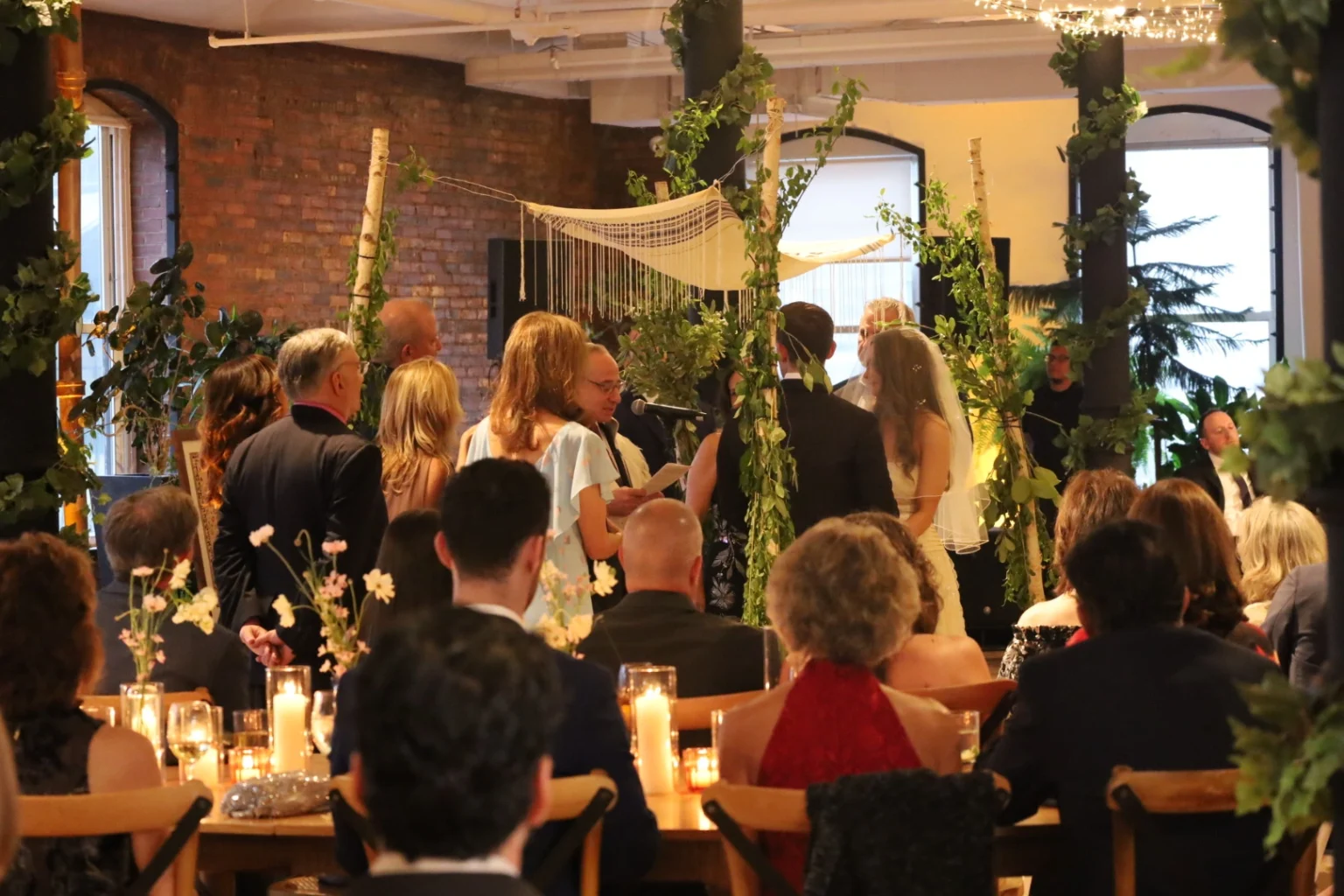
A daylight loft that handles ceremony, cocktail hour and dinner at one address.
The short answer, by date type
Venue lead time in New York is driven by which date you want, not by how far along your wedding planning is. Popular venues release their calendar one season at a time, so availability, not effort, sets the pace of the booking process. A September or October Saturday in Manhattan is the single most contested slot in the calendar, and couples chasing one should be looking a full year ahead. May and June Saturdays follow closely. July and August loosen up, partly because humidity pushes couples indoors and partly because guests travel.
Off-peak weekends behave completely differently. A Friday evening in March or a Sunday afternoon in November is often available four to six months out, sometimes less. Corporate calendars work in reverse: November and early December are the tightest weeks of the year for holiday parties, and those dates get claimed in late summer.
If you have a fixed date because of family travel or a religious calendar, treat that date as the constraint and start venue outreach the week you decide on it. If you have flexibility on the date, ask each venue for its open weekend dates first and let availability shape the shortlist of preferred sites. That one reversal saves months.
What “booked” actually means
Venues use three different words that sound alike. A courtesy hold means the venue will call you before releasing the date to someone else, usually with a short deadline. A first right of refusal means another couple is ahead of you and you get a window to match. A signed contract with a deposit is the only one that makes the date yours.
Ask what happens if a second couple wants your preferred date, how long you have to respond, and whether the deposit is applied to the balance or is separate. Ask when the balance is due and what the cancellation and postponement terms are. Those answers matter more than the site tour itself, and they are the part couples skip when they are booking at the last minute.
What drives availability at a popular venue
Three things decide whether your ideal date is still open. The first is season: peak wedding seasons in New York run September to October and May to June, and those weekend dates are the first choice for most couples. The second is guest count, because a venue holds its large-capacity dates for the bookings that meet its food and beverage minimum, and a reception for 60 guests often has more options than one for 180. The third is format: a site that hosts ceremony, cocktail hour and reception in one place, with usable outdoor space, is booked earlier than a room that only handles dinner.
Pricing follows the same pattern. Peak Saturday dates carry the highest venue pricing and the least room to negotiate, while off-season Fridays and Sundays offer better rates from the venue and from every vendor who works that day. Ask each venue for its pricing by day of the week before you settle on a date, and ask which months it considers off-peak. That single question often saves more than any other choice in the wedding planning process.
How to secure the date without wasting a weekend
Shortlist three venues, not ten. Send each the same short brief: date range, approximate guest count, indoor and outdoor needs, and whether you want ceremony and reception on site. Ask for open dates, capacity for a seated reception, what the rental includes, in-house catering rules, and the end time. Then tour only the venues that clear those questions, ideally on the same weekend so the comparison is fresh.
When you find the right site, secure it in writing the same week. Confirm what the deposit reserves, when the balance is due, and how coordination with your vendors works, including load-in windows and whether the venue offers day-of coordination or requires an outside planner. Couples who lose a date almost always lose it in the gap between the tour and the signature, not because they started their search too late.
Flexibility is the best planning tool you have
The couples with the widest choice of venues are not the ones who start earliest, they are the ones who keep two or three options open at once. Flexibility on the day of the week, on the month, and on the indoor or outdoor plan turns a closed calendar into a real shortlist. A weekday evening in a popular downtown location can be the ideal choice for a guest list that is mostly local, while an out-of-town guest list is better served by a Sunday in a season with cheap flights.
Local knowledge helps too. Ask each venue which weekends in your target season are already gone, which areas of the building or the outdoor terrace are usable in that month, and which vendors it works with most often. Venues answer those questions honestly because a mismatched booking is a problem for them as well. That conversation, early in the wedding planning process, will do more for your options than starting your search a month sooner, and it keeps you out of last minute decisions in the final weeks.
The paperwork has its own clock
New York State issues the marriage license immediately, but the ceremony may not take place within 24 hours of the exact time of issue, and that waiting period can only be waived by a judge. The license is then valid for 60 calendar days from the day after issue, extended to 180 days if one party is on active military duty. Both applicants must appear in person before a town or city clerk, and no representative or power of attorney can stand in for you.[1]
In the five boroughs, the Office of the City Clerk handles licenses and civil ceremonies, and appointments are scheduled in advance through Project Cupid, with virtual license appointments still available.[2] Because of the 60 day validity, this step belongs roughly three to six weeks before the wedding, not at the start. Couples who apply too early have to apply again.[3]
Permits are a late item, but not an afterthought
Anything indoors and privately held rarely needs a city permit. Two situations do. Amplified sound in a public place requires a Sound Device Permit, issued by the NYPD precinct covering the location, and street events with a speaker program or music need it as well.[4] Filming or photography on city exterior property may need a film permit, and when one is required the fee is $500 for each consecutive 14 day period of the project.[5] Hand held cameras and a tripod on public property, with no exclusive use of the street, generally fall under a free Letter in Lieu of Permit instead.
Practically, that means a rooftop toast inside a private venue is a venue conversation, while a portrait session on the sidewalk at Bleecker Street is a city conversation. Both are easy at eight weeks out and stressful at eight days out.

Booking milestones counted backwards from the wedding date.
Work the timeline backwards
Set the date, then count back. 12 to 14 months: shortlist and tour venues, confirm capacity for the seated or standing format you want, sign. 10 to 12 months: caterer or in-house food and beverage plan, photographer, band or DJ. 6 to 9 months: guest list and save the dates, hotel blocks, attire. 3 to 5 months: menu tasting, floor plan, vendor load-in schedule with the venue. 6 to 10 weeks: marriage license, final headcount, any sound or filming permits. Final two weeks: seating, timeline sign-off, payments closed.
Inside six months the order changes rather than compresses. Lock the venue and the caterer in the same week, accept that your photographer shortlist will be shorter, and pick a Friday or Sunday. The pieces that suffer in a short runway are the ones with a single supplier, such as a specific band or a custom cake, not the ceremony itself.
Outdoor space is one of the first things to disappear from a peak-season calendar.
Where a NoHo loft fits
Downtown loft venues shift the math slightly. A daylight loft with usable outdoor space handles ceremony, cocktail hour and dinner in one address, which removes the transport gap that eats an hour in many New York weddings. Our Loft 7 space and rooftop terrace are booked together for that reason, and the same footprint carries corporate events in the fall. If you are weighing dates, ask for open weekends across two seasons at once rather than one month at a time, then check availability before you commit to anything else.

